Undergraduate Program: Materials Science and Engineering
Materials Science and Engineering
Eastern Institute of Technology, Ningbo · School of Materials Science and Engineering| 2026 First Undergraduate Intake
Distinguished Faculty 2 Academicians Leading the Faculty PI 13 PIs | Frontier Research Areas New Energy Materials+Electronic Information Materials Two Key Research Areas | World-Class Facilities 720 m² Teaching Laboratory Courses Taught by Academicians and Other National-Level Experts |
■Program Overview
Materials Science and Engineering ProgramResponding to major national strategies and regional economic and social development needs, the program cultivates outstanding innovative talent in electronic information materials, new energy materials, and related fields. The program currently has 19 full-time faculty members, including 2 academicians、13 nationally recognized experts, all of whom hold doctoral degrees and have at least two years of overseas study or work experience. The program is supported by provincial key laboratories, a provincial engineering center, and teaching laboratories, and has established internship bases with more than ten leading enterprises. Core courses include Laboratory Safety and Protection, Frontiers of Modern Materials Science and Technology, Computational Materials Science and AI-Assisted Design, Introduction to Solid-State Physics, Semiconductor Physics and Devices, and New Energy Materials, with an emphasis on electronic information materials and new energy materials. The program awards a Bachelor of Engineering degree and normally takes four years to complete. Its distinctive features include a “1+3” model integrating general and specialized education, research training, and credit-bearing summer practical activities to strengthen innovation skills. |
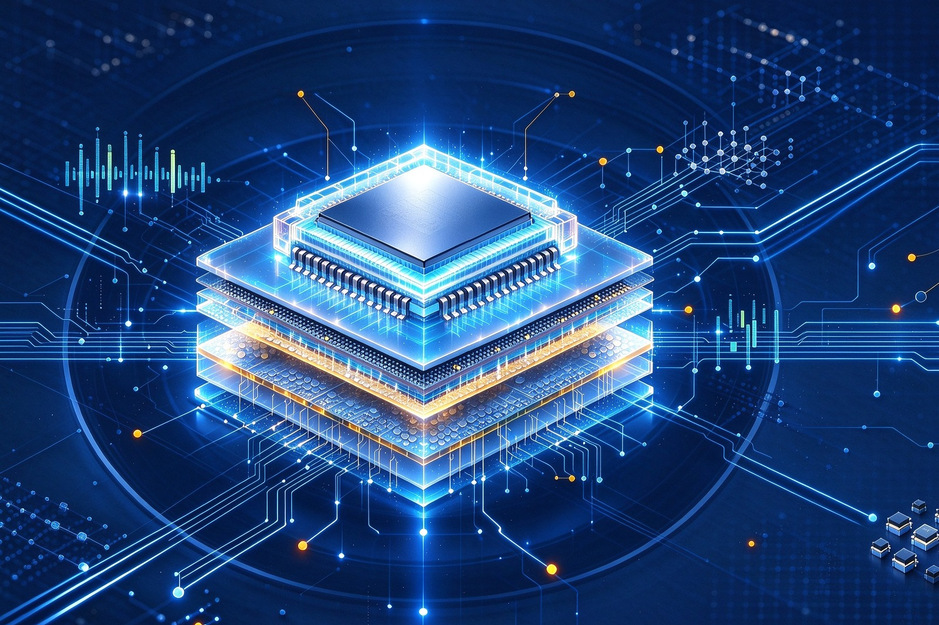
Focus on Electronic Information Materials |
■Two Frontier Research Areas
◆Electronic Information Materials | ◆New Energy Materials |
★ Foundational Core Course: Fundamentals of Materials Science MSE2101 |
Fundamentals of Materials Science is the foundational core course, and plays a pivotal role in the curriculum, helping students transition from fundamental mathematics and physics to specialized research. The course integrates the foundational theories of metallurgy, ceramics, and polymer physics, ,systematically explaining the “Composition — Microstructure — Processing — Properties” tetrahedral relationship in materials science,, establishing a unified disciplinary knowledge framework,, and laying a solid theoretical foundation for advanced coursework and scientific research。 |
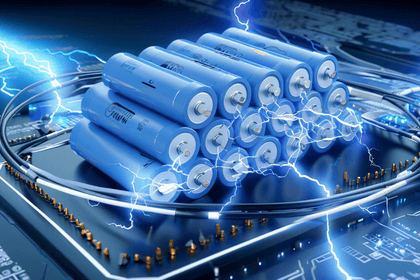
Focus on New Energy Materials |
Course Code MSE2101 | Total Credits / Practical Credits 4 Credits (3 + 1) | Lab Hours / Number of Experiments 16 Hours / 6 Experiments | Semester / Prerequisites Sophomore Fall General Chemistry · University Physics |
▍Six Major Laboratory Projects · An Integrated Learning Pathway from the Microscopic to the Macroscopic
No. | Experiment | Hours | Core Learning Objectives |
1 | Determination and Virtual Simulation of Binary Phase Diagrams of Metal Alloys | 2 | Master the principles of phase diagram determination,; reinforce a theory-before-practice approach |
2 | Heat Treatment and Microstructural Analysis of Metallic Materials | 2 | Deepen understanding of how processing determines microstructure |
3 | 3D Additive Manufacturing of Structural Materials | 3 | Reverse Engineering + 3D Printing,; develop systems thinking in engineering |
4 | Vacuum Fabrication and Surface Engineering of Multilayer Composite Thin Films | 3 | Magnetron Sputtering / Thermal Evaporation,; develop integrated experimental design skills |
5 | Solution-Phase Synthesis of Nanomaterials and Characterization of Optical/Thermal/Electrical Properties | 3 | Wet-Chemical Synthesis + Multiphysical Property Analysis |
6 | Device Assembly and Performance Evaluation of Functional Materials | 3 | Connect microstructure with material properties |
▍Three-Tier Progressive Laboratory Teaching System ●Fundamental Verification (Share: 40%) Standardized Procedures · Theory Verification · Basic Skills ●Integrated Design (Share: 40%) Integration of Knowledge · Experimental Design · Process Optimization ●Research Exploration (Share: 20%) Independent Topic Selection · Experimental Design · Results Analysis | ▍Benchmarking Against Leading Chinese Universities,; Aligning with International Frontiers This curriculum was designed following a comprehensive review of 9 leading Chinese universities:: A+ Disciplines:Shanghai Jiao Tong University · Harbin Institute of Technology · University of Science and Technology Beijing · Northwestern Polytechnical University A / A- Disciplines:Fudan University · Tianjin University · Wuhan University of Technology New Research Universities:ShanghaiTech University · Westlake University The course content closely follows the core principles of the discipline, and incorporates 3D printing, vacuum coating, nanomaterial synthesis, and other advanced modules, demonstrating a forward-looking and interdisciplinary approach。 |
Practical training partnerships have been established with more than ten technology companies, providing students with opportunities to be recommended for internships at partner enterprises

Apply to Eastern Institute of Technology, Ningbo — Materials Science and Engineering Program
Explore Materials · Shape the Future

Address: Zheng Jianli Red Building, 2911 Haijiang Avenue, Jiaochuan Street, Zhenhai District, Ningbo City, Zhejiang Province
Email: MSE@eitech.edu.cn
Postcode: 315200
Copyright © 2026 School of Materials Science and Engineering ICP License No.: Zhe ICP Bei 2023015999 Public Security ICP License No.: 33021102001146